python实现搜索文本文件内容脚本
本文介绍用python实现的搜索本地文本文件内容的小程序。从而学习Python I/O方面的知识。代码如下:
import os

#根据文件扩展名判断文件类型
def endWith(s,*endstring):
 array = map(s.endswith,endstring)
 if True in array:
  return True
 else:
  return False

#将全部已搜索到的关键字列表中的内容保存到result.log文件中
def writeResultLog(allExistsKeywords):
 #行分隔符
 ls = os.linesep
 #结果日志文件名
 logfilename = "result.log" #相对路径,文件在.py文件所在的目录中
 try:
  fobj = open(logfilename,'w')
 except IOError,e:
  print "*** file open error:",e
 else:
  fobj.writelines(['%s%s' % (keyword,ls) for keyword in allExistsKeywords])
  fobj.close()


#搜索指定关键字是否在指定的文件中存在
def searchFilesContent(dirname):
 #从searchkeywords.txt文件中初始化待搜索关键字列表
 filename = "searchkeywords.txt" #相对路径,文件在.py文件所在的目录中
 #待搜索关键字列表
 allSearchKeywords=[]
 #遍历文件当前行已搜索到的关键字列表
 existsKeywordsThisLine=[]
 #全部已搜索到的关键字列表
 allExistsKeywords=[]

 try:
  fobj = open(filename,'r');
 except IOError,e:
  print "*** file open error:",e
 else:
  for eachLine in fobj:
   allSearchKeywords.append(eachLine.strip('\n')); #使用strip函数去除每行的换行符
  fobj.close();

 #从excludekeywords.txt文件中初始化要排除的搜索关键字列表
 filename = "excludekeywords.txt" #相对路径,文件在.py文件所在的目录中
 #要排除的搜索关键字列表
 allExcludedKeywords=[]
 try:
  fobj = open(filename,'r');
 except IOError,e:
  print "*** file open error:",e
 else:
  for eachLine in fobj:
   allExcludedKeywords.append(eachLine.strip('\n')); #使用strip函数去除每行的换行符
  fobj.close();

 #从全部已搜索到的关键字列表排除掉不用搜索的关键字
 for excluedkw in allExcludedKeywords:
  if(excluedkw in allSearchKeywords):
   allSearchKeywords.remove(excluedkw);


 #遍历打开所有要在其中搜索内容的文件,若待搜索关键字列表为空,则不再继续遍历
 for root,dirs,files in os.walk(dirname):
  for file in files:
   if endWith(file,'.java','.xml','.properties'): #只在扩展名为.java/.xml/.properties文件中搜索
    #打开文件
    filename = root + os.sep + file #绝对路径
    filename = filename.replace("\\","\\\\") #将路径中的单反斜杠替换为双反斜杠,因为单反斜杠可能会导致将路径中的内容进行转义了,replace函数中"\\"表示单反斜杠,"\\\\"表示双反斜杠
    try:
     fobj = open(filename,'r');
    except IOError,e:
     print "*** file open error:",e
    else:
     #遍历文件的每一行
     for fileLine in fobj:
      #判断当前行是否包含所有搜索关键字
      for keyword in allSearchKeywords:
       #若包含,并添加到该行已搜索到的关键字列表中
       if keyword.upper() in fileLine.upper(): #将搜索关键字和该行文本内容都转换为大写后再进行匹配
        existsKeywordsThisLine.append(keyword)

      #将这些搜索到的关键字添加到全部已搜索到的关键字列表中,并包含文件名信息
      for keyword in existsKeywordsThisLine:
       allExistsKeywords.append(keyword+"\t"+filename.replace("\\\\","\\"))

      #将这些搜索到的关键字从待搜索关键字列表中移除(后续将不再搜索该关键字)
      for keyword in existsKeywordsThisLine:
       allSearchKeywords.remove(keyword)

      #清空该行已搜索到的关键字列表内容
      existsKeywordsThisLine = []

      #若所有的关键字都搜索到了,则记录日志文件,并结束搜索工作
      if len(allSearchKeywords)==0:
       fobj.close();
       writeResultLog(allExistsKeywords)
       print "DONE!",
       return
     fobj.close();

 #全部文件遍历结束
 writeResultLog(allExistsKeywords)
 print "DONE!",


#仅当本python模块直接执行时,才执行如下语句,若被别的python模块引入,则不执行
if __name__ == '__main__':
 searchFilesContent(r"G:\ccsSmartPipe\SmartPipe\src\java")
1.笔者使用该程序对java项目中的源文件内容进行关键字的搜索。程序入参为该项目本地文件系统路径G:\ccsSmartPipe\SmartPipe\src\java。
2.在配置文件中searchkeywords.txt中输入要搜索的任意多个关键字
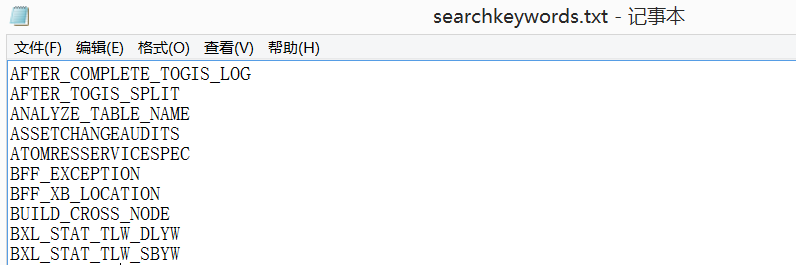
3.在配置文件中excludekeywords.txt中输入在searchkeywords.

4.程序执行完成后,即可在result.log日志文件中,查看搜索结果。即每个关键在哪些文件中存在。并给出每个文件的具体路径。

附件:源代码及配置文件
以上就是本文的全部内容,希望对大家的学习有所帮助,也希望大家多多支持【听图阁-专注于Python设计】。